
ALBA WELLNESS GROUP
Childhood Trauma & C-PTSD Therapy That Goes Deeper
You've done the talking. Now it's time to reach the wounds that words alone haven't touched yet.
What We Do
You've spent years in therapy. You've built vocabulary for your feelings, you understand your family dynamics, and you can name the patterns.
But something still doesn't shift. You still get flooded when conflict arises. You still freeze when someone raises their voice. Your body still carries a story your mind has already processed a hundred times. If this sounds familiar, it's not because therapy failed you, it's because what you're living with may require a different kind of treatment entirely.
Complex PTSD doesn't come from a single event. It comes from growing up in an environment where you were chronically unsafe, emotionally, physically, or both. It rewires your nervous system, your sense of self, and your ability to trust. Traditional talk therapy can help you understand what happened, but it often can't reach the places where the wound is stored: in your body, your reflexes, your automatic responses to the world. At Alba Wellness Group, we specialize in exactly that gap, the space between understanding your trauma and actually healing from it.
Our offices in Panorama City and Lancaster serve adults across the San Fernando Valley and Antelope Valley who are ready for something deeper. With clinicians trained in EMDR, somatic approaches, and trauma-specific modalities, we offer a structured, phased approach to treatment that prioritizes your safety at every step. You won't be pushed into anything you're not ready for. You will, finally, be met where you actually are.
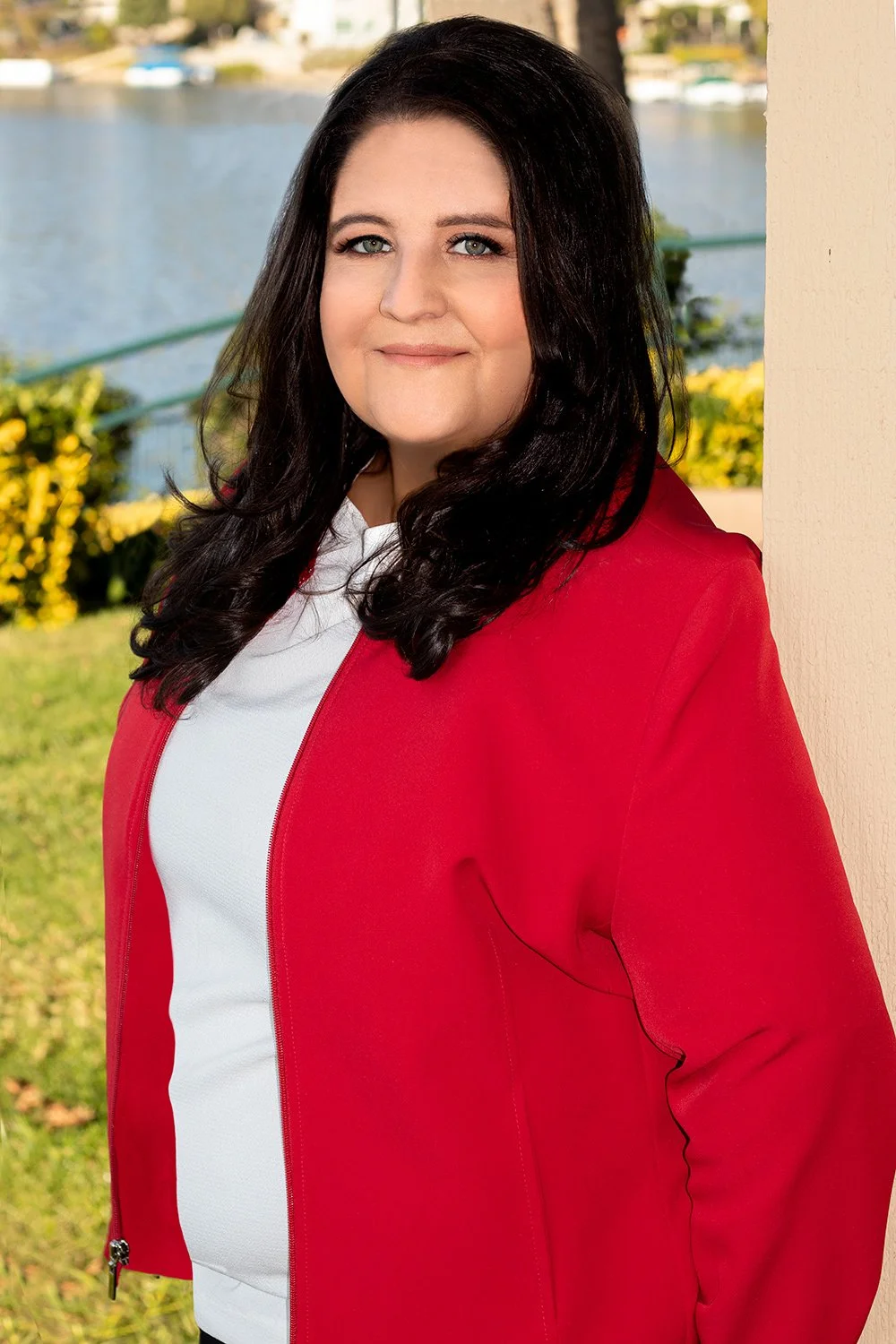
Alba Wellness Group was founded by Patricia Alba, LCSW, a licensed clinical social worker with over twenty years of experience in trauma and mood disorder treatment. With offices in Panorama City and Lancaster, California, the practice provides culturally responsive therapy for adults, children, teens, and couples, specializing in anxiety, depression, LGBTQ+ affirming care, EMDR, and Ketamine-Assisted Therapy.
How We Do It
Childhood trauma and Complex PTSD therapy at Alba Wellness Group is a specialized form of individual treatment designed for adults whose current struggles, anxiety, depression, emotional dysregulation, relational difficulties, and chronic shame are rooted in adverse childhood experiences.
Unlike general talk therapy, our approach recognizes that complex trauma reshapes the brain and nervous system in ways that require targeted, evidence-based intervention. We draw from EMDR (Eye Movement Desensitization and Reprocessing), Internal Family Systems, somatic awareness practices, and psychodynamic frameworks to address not just what you think about your past, but how your body and nervous system continue to respond to it.
Our treatment follows a phased model that is considered the gold standard for complex trauma work. The first phase focuses on stabilization, building internal resources, strengthening your window of tolerance, and ensuring you have the coping skills to engage safely with deeper material. Many clients find that this phase alone brings significant relief, because it teaches you how to regulate a nervous system that has been in survival mode for decades. Only when you and your therapist agree that you are ready do we move into phase two: the active processing of traumatic memories using EMDR and other modalities.
The third phase, integration, is where lasting transformation takes root. This is where you begin to build a life that reflects who you actually are, not who trauma forced you to become. You practice new relational patterns, explore identity beyond survival, and reconnect with parts of yourself that were shut down long ago. Throughout all three phases, your therapist remains attuned to your pace, your boundaries, and your autonomy.
This work is not about ripping open old wounds. It is about creating the conditions under which those wounds can finally close. Our clinicians, led by founder Patricia Alba, LCSW, with over 20 years of specialized trauma experience, bring both clinical rigor and deep compassion to every session.
✔ Founded by Patricia Alba, LCSW, with over 20 years of clinical experience in trauma and mood disorder treatment
✔ Specialized training in EMDR, DBT, IFS, Psychedelic Assisted Psychotherapy, and psychodynamic treatments
✔ Two established office locations serving the San Fernando Valley and Antelope Valley
✔ Culturally responsive and LGBTQ+ affirming practice
✔ Clinician-centered care model, ensuring therapists are supported to deliver the highest quality treatment
Start Healing What Talk Therapy Couldn't Reach
Benefits of Therapy at Alba Wellness Group
KEY BENEFITS
-
If you've been in therapy before and still feel stuck, you may have quietly started to wonder if something is wrong with you. Maybe you've told yourself you're not trying hard enough, or that you should be "over it" by now. Here's the truth that changes everything: Complex PTSD is neurobiological. It's not a failure of willpower, it's a rewiring of your nervous system that happened when you were too young to have any say in the matter.
Pioneering researchers like Bessel van der Kolk have demonstrated that trauma lives in the body, not just the mind. When a child grows up in an environment of chronic stress, whether that looks like emotional neglect, verbal abuse, witnessing domestic violence, or navigating a caregiver's addiction or mental illness, their developing brain adapts to survive. The amygdala becomes hypervigilant. The prefrontal cortex, responsible for rational thought, goes offline during moments of perceived threat. The body keeps the score long after the conscious mind has "moved on."
At Alba Wellness Group, we help adults across the San Fernando Valley and Antelope Valley understand the difference between single-incident PTSD and Complex PTSD (C-PTSD). While PTSD typically arises from a specific traumatic event, C-PTSD develops from prolonged, repeated trauma, usually in childhood, usually within relationships that were supposed to be safe. C-PTSD includes the hallmark symptoms of PTSD (flashbacks, hypervigilance, avoidance) but adds layers that Pete Walker identified as emotional flashbacks, toxic shame, a harsh inner critic, and difficulties with trust and connection. Recognizing this distinction is often the first moment of real relief our clients experience, because it finally explains the full picture.
-
One of the most common fears we hear from new clients is: "I'm afraid that going deeper will make things worse." This is a completely rational fear, and it tells us your nervous system is doing its job by trying to protect you. We want you to know that ethical, effective trauma therapy should never feel like being thrown into the deep end. That's why our treatment model is built on a carefully structured, phased approach that has been validated by decades of trauma research.
Phase one is about stabilization, and for many clients, this is where we spend the most time. During this phase, your therapist helps you build what clinicians call "resourcing" internal and external tools that expand your capacity to tolerate distressing emotions without becoming overwhelmed. You'll learn to recognize your window of tolerance, practice grounding techniques, and develop the ability to notice activation in your body without being hijacked by it. This phase is not preliminary busywork. It is foundational, life-changing work in its own right.
Phase two, trauma processing, only begins when your nervous system has the capacity to engage with difficult material and return to baseline afterward. Using EMDR and other evidence-based modalities, we help your brain reprocess memories that are stuck in survival mode so they can be stored as past events rather than ongoing threats. Our clinicians in Panorama City and Lancaster are trained to titrate this work carefully, checking in with your body's responses and adjusting pace in real time. You are always in the driver's seat. The goal is not to retraumatize, it is to help your nervous system finally complete the response it couldn't complete when you were a child.
-
You may have heard of EMDR, or you may have been specifically searching for it. Either way, you're likely wondering: Does it actually work? And how? EMDR (Eye Movement Desensitization and Reprocessing) is one of the most rigorously studied treatments for trauma, endorsed by the World Health Organization, the American Psychological Association, and the Department of Veterans Affairs. But beyond the credentials, what makes EMDR uniquely powerful for childhood trauma survivors is that it works with the brain's natural healing mechanisms, and it doesn't require you to talk through every painful detail of what happened.
When traumatic memories are stored, they often remain "unprocessed," meaning your brain files them in a way that keeps them feeling present and active rather than past and resolved. This is why a particular tone of voice, a smell, or even a certain time of year can suddenly flood you with emotions that seem to come from nowhere. EMDR uses bilateral stimulation, typically guided eye movements, to help the brain reprocess these stuck memories, moving them from the limbic system's emergency response into long-term memory storage where they belong.
At Alba Wellness Group, our EMDR-trained clinicians integrate this modality within our phased treatment model, meaning you will never be asked to engage in EMDR processing before you have the stabilization skills to do so safely. For adults in the San Fernando Valley and Antelope Valley who have spent years in traditional talk therapy and still feel triggered by their past, EMDR often represents a turning point, the moment when insight becomes embodied change. Many clients describe the experience as finally feeling free from memories that once controlled them, not because the memories disappear, but because they lose their emotional charge.
-
Childhood trauma doesn't happen in a vacuum. It happens within families, cultures, neighborhoods, and systems, and effective trauma therapy must account for all of those layers. At Alba Wellness Group, cultural responsiveness isn't a checkbox; it's a core value that shapes how we show up in every session. We understand that for many adults in the San Fernando Valley and Antelope Valley, the experience of trauma is inseparable from the experience of navigating systemic oppression, cultural expectations, immigration stress, racial identity, gender identity, and intergenerational patterns.
Pete Walker writes extensively about how the "four F" trauma responses, fight, flight, freeze, and fawn, become embedded survival strategies. But what's often left out of mainstream trauma literature is how these responses are shaped by cultural context. The client who learned to fawn may have done so not only because of an unpredictable caregiver, but because their community required deference for survival. The client who dissociates may carry intergenerational trauma that predates their own lifetime. We hold space for this complexity because we believe that healing can only happen when you are seen in full.
Our team reflects the diversity of the communities we serve, and we actively create an environment where clients of color, LGBTQ+ individuals, immigrants, and anyone who has felt unseen in traditional therapy spaces can feel genuinely welcomed. You won't have to educate your therapist about your identity. You won't have to code-switch in session. You'll be met by a clinician who understands that your cultural context isn't separate from your healing; it's central to it.
-
For many adults with Complex PTSD, the concept of "being yourself" feels abstract, even meaningless. When your earliest relationships taught you that your needs were inconvenient, your emotions were too much, or your authentic self wasn't safe, you learned to become whoever the situation required. You may have become the caretaker, the achiever, the invisible one, or the peacekeeper. These adaptations kept you alive. But they also meant that somewhere along the way, you lost contact with who you actually are underneath all of that armor.
The integration phase of trauma therapy, the third phase of our treatment model, is specifically designed to address this. Once the acute trauma responses have been processed and your nervous system has greater capacity for regulation, we help you begin the deeply meaningful work of reconnecting with yourself. This looks different for every person. For some, it means learning to identify and express needs in relationships for the first time. For others, it means grieving the childhood they didn't get so they can stop unconsciously recreating it. For many, it means discovering interests, desires, and values that were never given room to develop.
This phase of treatment is where clients often report the most profound shifts, not dramatic breakthroughs, but a quiet, growing sense of rightness. A feeling of coming home to yourself. Our clinicians support this process with the same attunement and care that characterizes every phase of treatment, helping you practice new ways of being in relationship, in community, and in your own skin. Serving adults throughout Panorama City, Lancaster, and the greater Los Angeles area, we walk alongside you as survival gives way to something you may not have experienced before: genuine aliveness.
-
When you're looking for a therapist to help you with something as vulnerable as childhood trauma, credentials matter, but so does the person behind them. Alba Wellness Group was founded by Patricia Alba, LCSW, a licensed clinical social worker with more than two decades of direct experience treating trauma and mood disorders across the full lifespan. Patricia's approach integrates EMDR, Internal Family Systems (IFS), Dialectical Behavior Therapy (DBT), psychodynamic treatment, and Psychedelic-Assisted Psychotherapy, providing a depth and range of clinical tools that few practices can match.
Patricia built Alba Wellness Group on a philosophy that is both clinician-centered and community-oriented. She understands that the quality of care clients receive is directly linked to how well therapists themselves are supported. That's why every clinician at Alba is carefully trained, clinically supervised, and given the professional environment they need to do their best work. This isn't a factory model of therapy. It's a practice built on the belief that healing happens in relationship, and that relationship begins with a therapist who is grounded, present, and genuinely invested in your progress.
For adults in the San Fernando Valley and Antelope Valley who have been searching for a therapist with real expertise in complex trauma, not just someone who lists "trauma" on their website, Alba Wellness Group offers the combination of clinical depth, cultural awareness, and human warmth that this work demands. Patricia's vision of creating a world where everyone belongs extends to every client who walks through our doors, and that vision informs every treatment plan, every session, and every clinical decision our team makes.
Our Services
Childhood Trauma & Complex PTSD Therapy
Our core specialty for adults whose current mental health challenges, anxiety, depression, relational difficulties, emotional dysregulation, are rooted in adverse childhood experiences. We use EMDR, IFS, and somatic approaches within a phased treatment model designed for C-PTSD. Serving adults across the San Fernando Valley and Antelope Valley, both in-person and via telehealth.
EMDR & Trauma Processing
Eye Movement Desensitization and Reprocessing (EMDR) is an evidence-based therapy that helps the brain reprocess traumatic memories so they lose their emotional charge. At Alba, EMDR is integrated within a stabilization-first model, ensuring clients are resourced and ready before processing begins. Effective for PTSD, C-PTSD, anxiety, and grief.
LGBTQ+ Affirming Therapy
We provide a genuinely affirming therapeutic space for LGBTQ+ adults, including those navigating the intersection of identity and trauma. Our clinicians are trained to understand how minority stress, family rejection, and systemic discrimination compound the effects of childhood adversity.
Anxiety & Depression Treatment
Many adults with unresolved childhood trauma experience chronic anxiety and depression that hasn't fully responded to medication or general therapy. We address the root causes, not just the symptoms, using trauma-informed modalities that work with your nervous system to create lasting change.
Grief & Loss Counseling
Complex trauma often involves grief that's hard to name, grief for a childhood lost, for a parent who couldn't show up, for the person you might have been. Our grief work honors these ambiguous losses alongside more traditional bereavement, helping you move through mourning toward meaning.
Our Process
Step 1
Book Your Free 15-Minute Trauma Therapy Consultation
Your journey begins with a brief, no-pressure phone consultation. During this call, you'll speak with a member of our team to share a little about what you're experiencing, ask any questions you have about our approach, and determine whether Alba Wellness Group feels like the right fit. This is not a clinical assessment; it's a conversation designed to help you feel informed and comfortable before making any commitment. Many clients tell us this call alone brings relief, because it's often the first time someone has named what they're going through with clarity. Call (818) 741-2906 or schedule online. Typical response time is within one business day.
Step 2
Your First Sessions, Assessment and Stabilization
Your first few sessions focus on building a relationship with your therapist and establishing safety. Your clinician will conduct a thorough biopsychosocial assessment that explores your history, current symptoms, strengths, and goals. Together, you'll collaboratively develop a treatment plan. Then we move into phase one: stabilization. During this period, which may last several weeks to several months depending on your needs, you'll develop grounding techniques, nervous system regulation skills, and internal resources that prepare you for deeper work. You set the pace. There is no rush.
Step 3
Trauma Processing With EMDR and Integrative Methods
When you and your therapist agree that your nervous system has the capacity to engage with traumatic material safely, we begin phase two. Using EMDR and complementary modalities, your therapist guides you through reprocessing specific memories and emotional patterns rooted in childhood. Sessions are carefully titrated, meaning your therapist monitors your nervous system responses in real time and adjusts intensity accordingly. You remain in control throughout the process. Many clients are surprised to find that this phase feels less overwhelming than they anticipated, precisely because of the stabilization work that preceded it.
Step 4
Integration, Building the Life You Actually Want
Phase three is where insight becomes embodied change. With the acute charge of traumatic memories reduced, you'll begin exploring who you are beyond your survival patterns. This phase involves practicing new relational skills, reconnecting with neglected parts of yourself, setting boundaries, and building a daily life that reflects your values rather than your fear. Integration work is ongoing and deeply personal, it may involve exploring identity, rebuilding trust, or simply learning to experience joy without waiting for the other shoe to drop. Your therapist supports this transition with the same care and attunement that characterized every previous phase.
Our Approach
At the heart of our work is a conviction borrowed from Bessel van der Kolk's foundational insight: the body keeps the score.
For adults living with the effects of childhood trauma, this means that healing cannot happen through cognitive understanding alone. You can know exactly why you react the way you do and still find yourself flooded with shame, frozen in conflict, or unable to tolerate intimacy. This isn't a failing of insight, it's the nature of how trauma is stored. Our therapeutic approach is designed to bridge the gap between knowing and healing by engaging the whole person: mind, body, and relational self.
We draw from a rich integration of evidence-based modalities. EMDR provides a structured framework for reprocessing traumatic memories at the neurobiological level. Internal Family Systems (IFS) helps clients develop a compassionate relationship with the protective parts of themselves that developed in response to trauma: the inner critic, the people-pleaser, the part that shuts down. Psychodynamic approaches illuminate the unconscious patterns that continue to shape your relationships and self-perception. And somatic awareness practices help you learn the language of your own nervous system, so you can respond to stress from a place of choice rather than reflex.
What makes our approach distinct in the San Fernando Valley and Antelope Valley is the deliberate integration of cultural responsiveness into every aspect of treatment. We don't treat trauma in isolation from context. We understand that for many of our clients, childhood adversity occurred within systems of oppression, immigration, poverty, or cultural dislocation, and that effective treatment must honor these realities. Our clinicians are trained to hold the full complexity of your experience without reducing it to a diagnostic label.
Ultimately, we believe that you are not broken. You are a person whose nervous system adapted brilliantly to impossible circumstances. Our job is to help you update those adaptations, gently, safely, and at your own pace, so that survival can give way to something richer: connection, authenticity, and a life that finally feels like your own.
Patricia Alba, LSCW
Owner, Licensed Clinical Social Worker
Frequently Asked Questions
-
PTSD typically develops after a single traumatic event, an accident, assault, or natural disaster. Complex PTSD (C-PTSD) results from prolonged, repeated trauma, usually during childhood within caregiving relationships. C-PTSD includes PTSD symptoms plus additional challenges: emotional flashbacks, chronic shame, difficulty with trust and relationships, and a disrupted sense of identity. Our therapists at Alba Wellness Group specialize in recognizing and treating C-PTSD, which requires a more nuanced, phased approach than standard PTSD treatment.
-
Many of our clients come to us after years of productive but ultimately incomplete talk therapy. The difference is that our approach specifically targets how trauma is stored in the nervous system, not just how it's understood cognitively. Using EMDR and somatic modalities within a stabilization-first framework, we help you process at a level that talk therapy alone often cannot reach. If you've done the intellectual work and still feel stuck, this is likely the missing piece. Learn more about our EMDR approach.
-
Absolutely not. Our phased treatment model is specifically designed to prevent retraumatization. You will not be asked to dive into traumatic memories until you and your therapist have spent meaningful time building stabilization skills and internal resources. Even during the processing phase, EMDR does not require you to narrate your experiences in detail. Your therapist monitors your nervous system in real time and adjusts the work to stay within your window of tolerance. You are always in control.
-
Yes. We offer secure telehealth sessions for clients throughout California, in addition to in-person sessions at our Panorama City and Lancaster offices. While some aspects of trauma therapy, particularly EMDR, can be adapted for a virtual format, we'll discuss with you during your consultation which modality best fits your needs and circumstances.
-
Common signs include chronic anxiety or depression that doesn't fully respond to treatment, difficulty maintaining close relationships, a persistent inner critic, emotional reactions that feel disproportionate to the situation, people-pleasing or difficulty setting boundaries, and a general sense of not knowing who you really are. If you recognize yourself in these patterns, a free 15-minute consultation with our team can help you explore whether childhood trauma therapy is the right next step. Call (818) 741-2906](tel:8187412906) or schedule online.
Your Healing Starts With One Call
Book your free 15-minute trauma therapy consultation today, no pressure, just clarity.