
Teaching Your Kids About Anger
Most parents know the moment well. A backpack hits the floor, a door slams, a voice rises two octaves over something that seemed small five seconds ago. Maybe your child is seven and screaming about a broken crayon, or fifteen and stone-silent with a jaw set like concrete. Either way, the feeling in your chest is the same, along with a quiet question you may not say out loud. Is this normal? What is my kid supposed to do with all of that?
Here is the reassuring part. Anger is not a flaw in your child's character or evidence that you have failed as a parent. It is a normal human emotion that every person feels, and children feel it long before they have the words or the brain development to manage it well. What kids need is not a home where anger never happens, but a home where anger is allowed to exist and someone patiently teaches them what to do with it. This article covers what anger actually is, what your child learns by watching you, practical ways to build these skills at home, and how to tell when extra support might help.
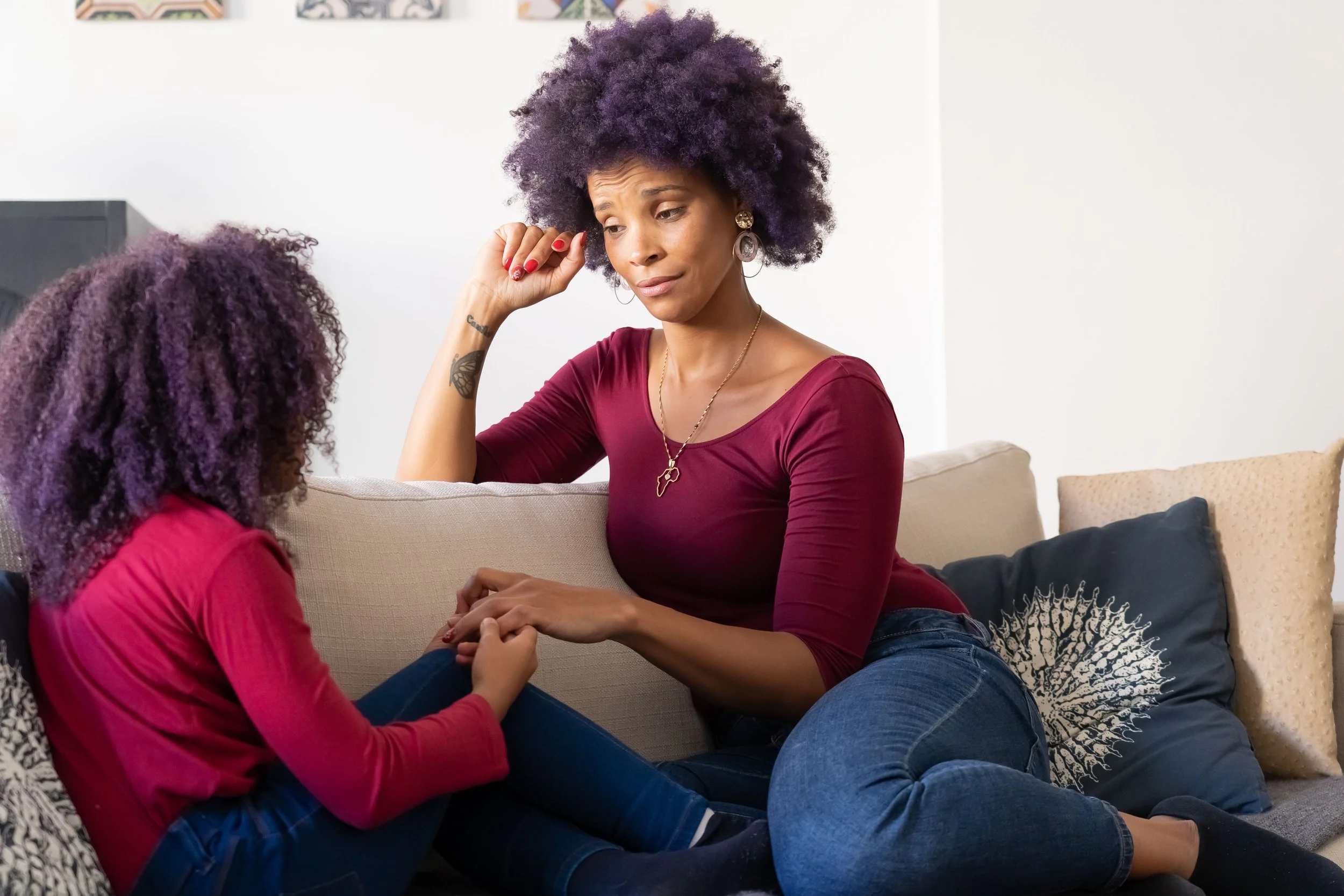
What Anger Actually Is (and Why Kids Feel It So Intensely)
Anger is a signal. It shows up when something feels unfair, when a need goes unmet, or when a child feels powerless in a situation they cannot change. Underneath most anger sits something softer and harder to say out loud: hurt, fear, embarrassment, exhaustion, or loneliness. When a child yells "I hate you," they are almost never reporting a fact. They are reporting an overwhelm they do not yet have language for.
The intensity has a biological explanation. The part of the brain responsible for pausing and weighing consequences is still developing well into a person's twenties, while the alarm system that fires during a threat is online from early childhood. That mismatch is why a ten-year-old can go from calm to furious in seconds and then, twenty minutes later, genuinely not understand what happened. Their body got there before their thinking did.
Anger looks different at different ages
Young children tend to express anger through their bodies, because that is what they have available. Older kids and teens have more words but also more privacy, so anger can go underground and resurface as sarcasm, withdrawal, or a fight about something unrelated.
Toddlers and preschoolers: tantrums, hitting, throwing, dropping to the floor, difficulty recovering without help.
Elementary-age children: yelling, tattling, slamming things, saying "it's not fair," blaming a sibling, sudden tears mixed with rage.
Middle schoolers: eye rolling, door slamming, short answers, big reactions to small corrections, conflict with friends.
Teenagers: silence, irritability, sarcasm, staying in their room, snapping at the safest person in the house, which is usually a parent.
Families who want structured practice with these skills, alongside other parents working on the same thing, can explore the workshops and programs offered at Alba Wellness Group.
What Your Child Learns by Watching You
Children learn emotional skills far more from observation than instruction. Long before your child can repeat a coping strategy back to you, they have absorbed how the adults around them handle traffic, disappointment, and conflict with each other. That is not meant to add guilt to a full plate. It is good news: you do not have to be a calm person to teach calm. You only have to narrate the effort.
That means saying the quiet part out loud. "I'm frustrated, so I'm going to take a minute before we finish this conversation." "I raised my voice earlier and that wasn't fair to you." Repair matters more than perfection. A child who watches a parent lose their temper, come back, name it, and reconnect learns something genuinely useful: anger does not end relationships.
Some family scripts worth examining
Many of us were raised with unspoken rules about anger, and those rules usually came from real circumstances. Some families learned that anger was disrespectful and unsafe to show. Some grew up in homes where survival left little room for anyone's feelings. None of this makes anyone a bad parent. It just means the script you inherited may not be the one you want to pass on.
"Stop crying or I'll give you something to cry about."
"Good kids don't get angry."
"Boys don't cry, but boys can rage."
"Girls should be sweet and easy."
"We don't talk about that outside this house."
You are allowed to keep the parts of your upbringing that gave you strength and set down the parts that did not. Deciding which is which is often the real work of parenting.
Six Ways to Teach Anger Skills at Home
These are not tricks for making anger disappear. They are practices that, repeated over months, help a child recognize anger earlier and choose what to do with it. Pick one or two to start rather than all six at once.
1. Name the feeling before you correct the behavior
When a child is flooded, correction does not land. Their thinking brain is temporarily offline. Lead with recognition instead: "You're really mad that practice got canceled." Naming an emotion has a measurable calming effect, partly because it moves the experience from raw sensation into language.
Once their body settles, address what happened: "You can be that angry and still not throw the controller." The order matters. Connection first, correction second.
2. Separate the feeling from the behavior, every single time
Kids need to hear the distinction stated plainly and repeatedly: all feelings are allowed, and some actions are not. "It is okay to be furious with your brother. It is not okay to hit him." Said often enough, this becomes an internal rule rather than a parental one.
It also protects against the shame spiral, where a kid concludes that being angry makes them a bad person. Shame rarely reduces aggression.
3. Build a plan while everyone is calm
The worst time to invent a coping strategy is mid-explosion. Sit down on a quiet afternoon and ask your child what actually helps them: cold water, music, a walk around the block, punching a pillow, drawing, being left alone for ten minutes. Write the list down and put it somewhere visible.
Let your child own the plan. A strategy they chose is one they might actually use; one imposed on them is one more thing to resist.
4. Teach the body before the words
Anger lives in the body first: hot face, tight fists, fast heartbeat, a stomach that clenches. Help your child identify their own early warning signs by asking after the fact, "Where did you feel it first?" Kids often surprise themselves with how specific the answer is.
Then pair those signals with something physical. Slow exhales longer than the inhale, pushing hands against a wall, or stepping outside all give the nervous system a way down. Younger children often respond better to movement than to breathing exercises.
5. Repair out loud after a blowup
Once things settle, come back. Not to lecture, but to close the loop: "That got loud earlier. I want to hear what was going on for you."
If you also lost your cool, model the apology you would want your child to be able to give someday. Specific, brief, and without a "but" attached to the end of it.
6. Notice the times it goes well
Parents catch the explosions and miss the near-misses. If your child walked away instead of swinging, say something: "I saw you take space instead of yelling. That took a lot."
Skills grow where attention goes. This is the slowest of the six practices and often the most powerful.
Progress here is measured in months and years, not weekends. A child who used to melt down for an hour and now recovers in fifteen minutes is doing extremely well, even if the house still gets loud sometimes.
When It Makes Sense to Ask for Extra Support
Most anger is developmental and responds well to consistency at home. Sometimes, though, anger carries more weight than a family can unpack alone, and that is worth taking seriously without treating it as a crisis. It can help to talk with a professional if your child's anger is escalating rather than easing, if it is causing real trouble at school or with friendships, if there is aggression toward people or animals, or if anger appeared suddenly after a loss, a move, or a frightening event.
It is also reasonable to reach out for your own sake. Parenting a child with big emotions is depleting, and many parents arrive at therapy not because their child is failing but because they want to respond differently than they currently can. Families often want to know who they would be sitting across from before they call, and you can read about our team and our approach to care before deciding whether it feels like a fit. Support is available across California through in-person visits in Panorama City and Lancaster as well as telehealth, in both English and Spanish.
Bringing It Home
Teaching your kids about anger is not about raising a child who never gets mad. It is about raising a person who can feel something enormous and still choose what to do next. That skill is built one ordinary moment at a time, in the unglamorous repetition of naming feelings, holding limits, and coming back after things go sideways. Your child does not need a parent who gets it right every time. They need one who keeps returning to the conversation.
If anger has been running your household lately, and you are tired of ending most days feeling like the referee, you do not have to keep working it out alone. Alba Wellness Group offers therapy for children, teens, adults, and families across California, with a team that understands the cultural and community context families are living in. Reaching out is not an admission that something is broken. It is one more way of teaching your kids that feelings are worth taking seriously.
At Alba Wellness Group, we believe everyone deserves a space where they can heal, grow, and truly belong. If you're ready to take the next step in your journey, we're here to walk alongside you; contact us today for your free consultation.